Surfskate Geometry Report 2026: What 200 Boards Reveal
Original data study of 200 surfskates, 33 truck systems and 96 wheels. Median wheelbase, spring vs bushing pivot angles, price tiers and wheel durometer — verified figures you can cite.
Quick buy: featured picks
As an Amazon Associate we earn from qualifying purchases. Other retailer links are also affiliate. No extra cost to you.
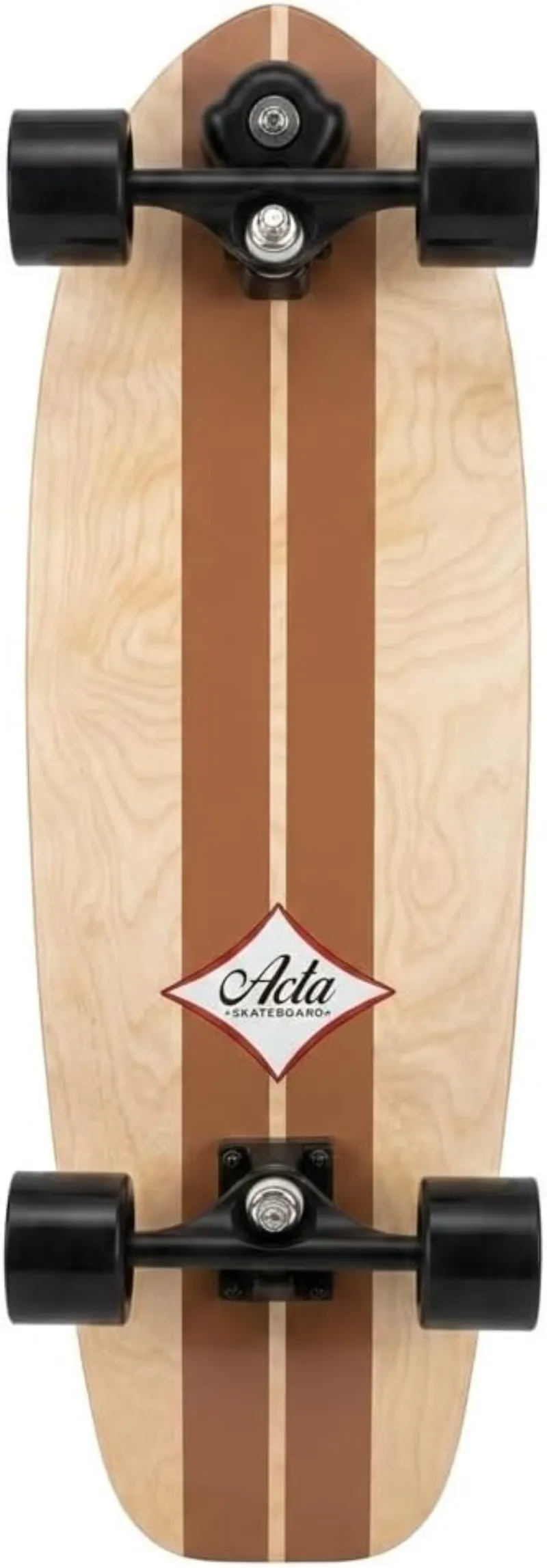
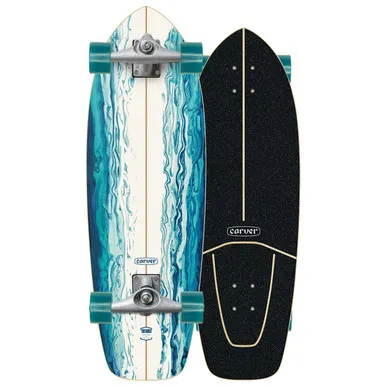
Catalogue reference: $239. Retailer prices may differ.
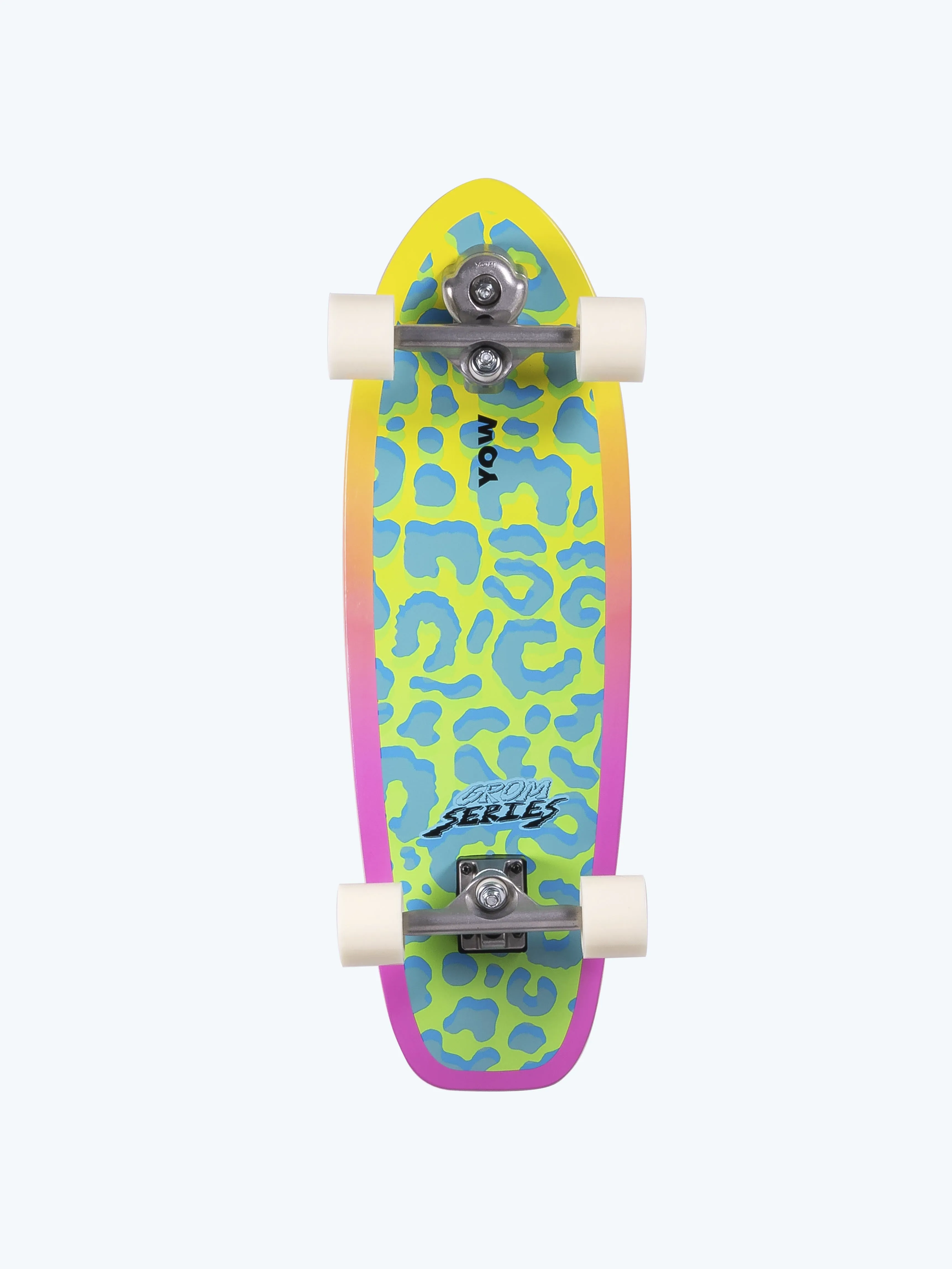
Catalogue reference: $220. Retailer prices may differ.
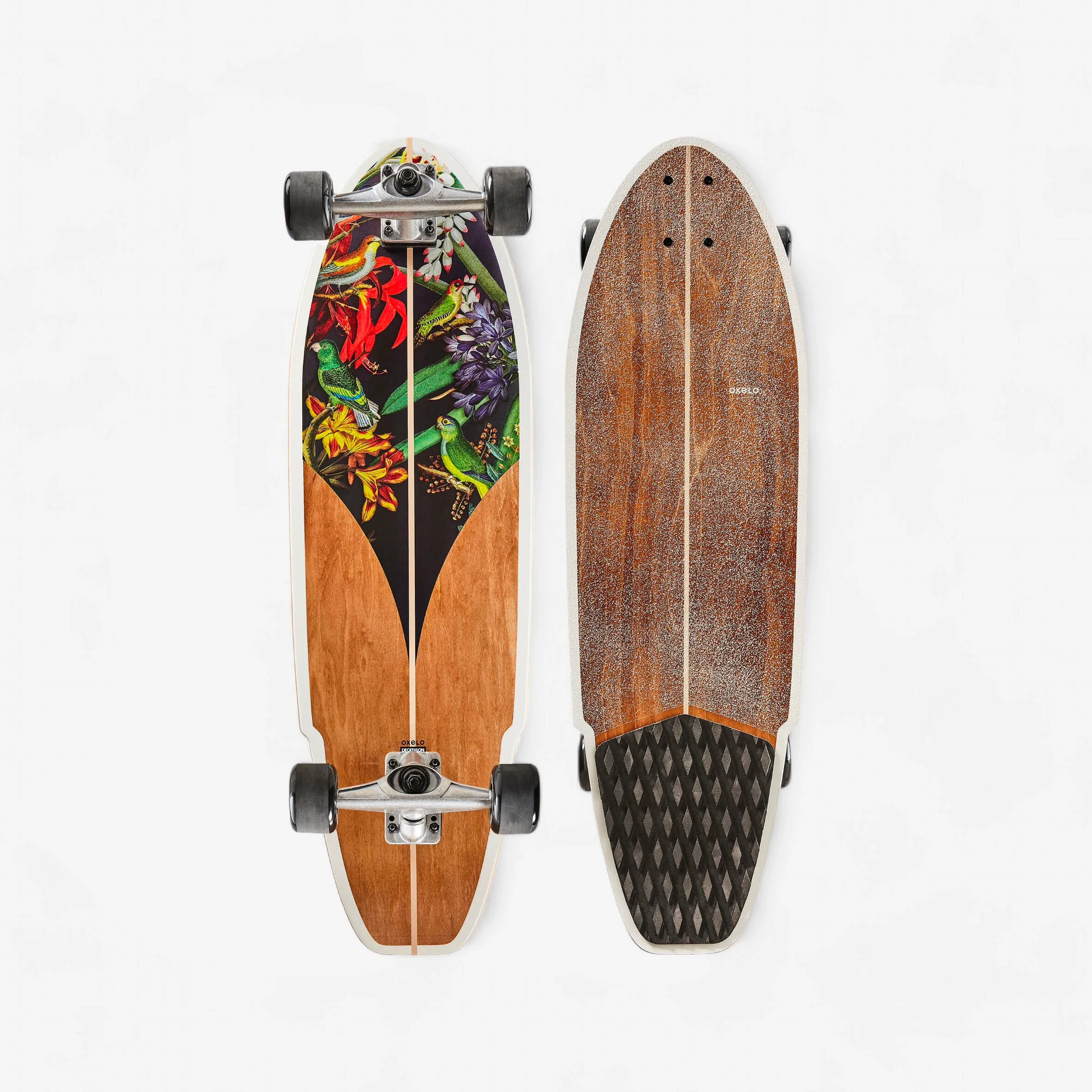
Catalogue reference: $129. Retailer prices may differ.
Most surfskate advice is opinion dressed as fact. We wanted numbers. So we took our catalog of 200 surfskate completes, 33 truck systems and 96 wheels across 24 brands — each spec verified from manufacturer sheets and hands-on measurement where the maker publishes it — and computed what the market actually looks like. No affiliate angle, no brand we’re paid to favor. Just the geometry.
Every figure below is computed by a single deterministic script from the same dataset that powers the catalog, and the full computed figures are published as open data (CC BY 4.0) so you can download and re-check them. Medians are the headline (they shrug off the handful of 60–74” surf-longboards in the set); means and ranges are shown alongside so you can see the spread yourself. Coverage isn’t total — some makers don’t publish every spec — so we report n (the number of boards with that measurement) on every chart rather than implying all 200 have every figure.
The headline numbers
- Median wheelbase: 17.6” — and ~57% of all boards sit in the 16–20” range.
- Spring trucks pivot 14.2° deeper than bushing trucks on the mean (33.8° vs 19.6°; 15° on the median).
- The median surfskate costs €228.2 / $239.9, from €76.99 to €643.99.
- Surfskate wheels are a 80A monoculture — half the catalog sits within 78–82A regardless of size.
- Nearly half the catalog (46.5%) is built for surf training, not cruising.
Wheelbase: the one number that matters most
Wheelbase — the distance between your trucks — controls how tight a surfskate turns. Short = surfy and twitchy; long = stable and lazy. The median across 183 measured boards is 17.6”, with the middle 50% between 16.8” and 20”.
Across 183 boards with a measured wheelbase. The 17–18" band is the single most common.
The mean (18.7”) sits higher than the median because the catalog includes surf-longboards that stretch to a 50” wheelbase. Strip those out and the picture is tight: a typical surfskate is a 16-to-just-under-20” machine (~57% of the set), and the most common single band is 17–18”.
Longer decks carry longer wheelbases
Deck length and wheelbase scale together, but not one-to-one — a longer deck leaves room for a longer wheelbase, yet designers keep compact boards proportionally tighter to stay surfy.
Median wheelbase per deck-length bracket. Longer decks run proportionally longer wheelbases.
Read it as a buying signal: if you want surf-like quickness, a sub-31” deck will almost always give you a sub-17” wheelbase. If you want glide and stability, the 32”+ decks open up to 18–20”+.
Spring vs bushing: the 14.2° that defines the feel
The front truck is what makes a surfskate a surfskate. Two mechanisms dominate, and the gap between them is the single biggest determinant of ride feel.
Mean pivot angle by mechanism, among trucks with a published pivot figure.
Spring-based systems average 33.8° against 19.6° for bushing — a 14.2° gap on the mean, 15° on the median (35° vs 20°). One caveat in the open: only 8 of 12 spring systems and 10 of 16 bushing systems publish a pivot angle, so these are the documented subset, not every truck — roughly a third of each family doesn’t list a figure. The direction is not in doubt, though: that gap is why spring trucks snap back like a surfboard rail and bushing trucks feel progressive and forgiving, and why almost every coach tells beginners to start on bushing.
Of 33 distinct truck systems in the catalog.
Bushing is the volume leader (48.5% of systems) because it’s cheaper, more stable and easier to learn on. Spring is the enthusiast’s choice (36.4%). Adapter and gravity systems are niche.
What a surfskate actually costs
Price brackets across 184 boards with a EUR price.
The median complete is €228.2 / $239.9, and the 50% middle of the market runs €195–€299.2. The floor is Flying Wheels Surfskate UNIVERSE 31 at €76.99; the ceiling is the Hamboards Classic 74” at €643.99 (a surf-longboard, not a typical board). The practical takeaway: a credible first surfskate lives in the €150–225 tier, and once you pass ~€300 you’re paying for refinement, not basic function.
Wheels: the 78–82A consensus
We expected wheel durometer to vary with diameter — soft-and-small for grip, hard-and-big for speed. The data says otherwise.
Across 95 wheels. Surfskate wheels rarely stray from the soft 78–82A band.
Median durometer is 80A, and the spread is astonishingly narrow: the middle 50% of all 95 wheels sit between 78A and 82A, and the median holds across every diameter bracket (78.8–81A) — softness does not scale with size the way it does on longboards. Surfskate wheels are a soft-grip monoculture by design: the carve demands grip, and grip means ~80A. Median diameter is 69mm. The full range runs 75–101A, but harder wheels (90A+) are the rare exception, used for sliding and park.
What the catalog is really for
Boards by category.
Nearly half of all boards (46.5%) are categorized as surf-trainers, with hybrids at 25.5%. Pure cruisers are a small minority. The market has decided what a surfskate is for: practicing surf on land.
Methodology & how to cite
Figures computed from the SurfSkate.app catalog (200 surfskates, 33 truck systems, 96 wheels, 24 brands) on 2026-06-13. Specs are sourced from manufacturer sheets and hands-on measurement, normalized into one schema. Medians are the headline statistics; quantiles use linear interpolation; n is reported per chart because not every maker publishes every spec. The full computed figures are published as a machine-readable open-data file — download the dataset (JSON, CC BY 4.0) — so every number here can be independently re-checked.
Cite this report (CC BY 4.0):
SurfSkate.app (2026). Surfskate Geometry Report 2026. https://surfskate.app/blog/surfskate-geometry-report-2026/
Journalists, shops and bloggers: you’re welcome to reproduce any chart or stat with a link back. Want a custom cut (a specific brand, a different bracket, a side-by-side)? We’ll pull it — the underlying catalog and comparison tool are free.
Keep reading
- Carver vs YOW — the data applied to the two biggest brands.
- Spring vs bushing surfskate trucks — the mechanism deep dive behind the 14.2° gap.
- Surfskate wheelbase guide — how to pick your number.
- Best entry-level surfskates 2026 — where to start.