How to Fall Safely on a Surfskate: 3 Techniques That Prevent Injury
Falling is the real surfskate risk. Learn three safe-fall techniques — step-off, roll, and knee slide — plus the gear and at-home drills that turn a slam into a non-event.
Quick buy: featured picks
As an Amazon Associate we earn from qualifying purchases. Other retailer links are also affiliate. No extra cost to you.
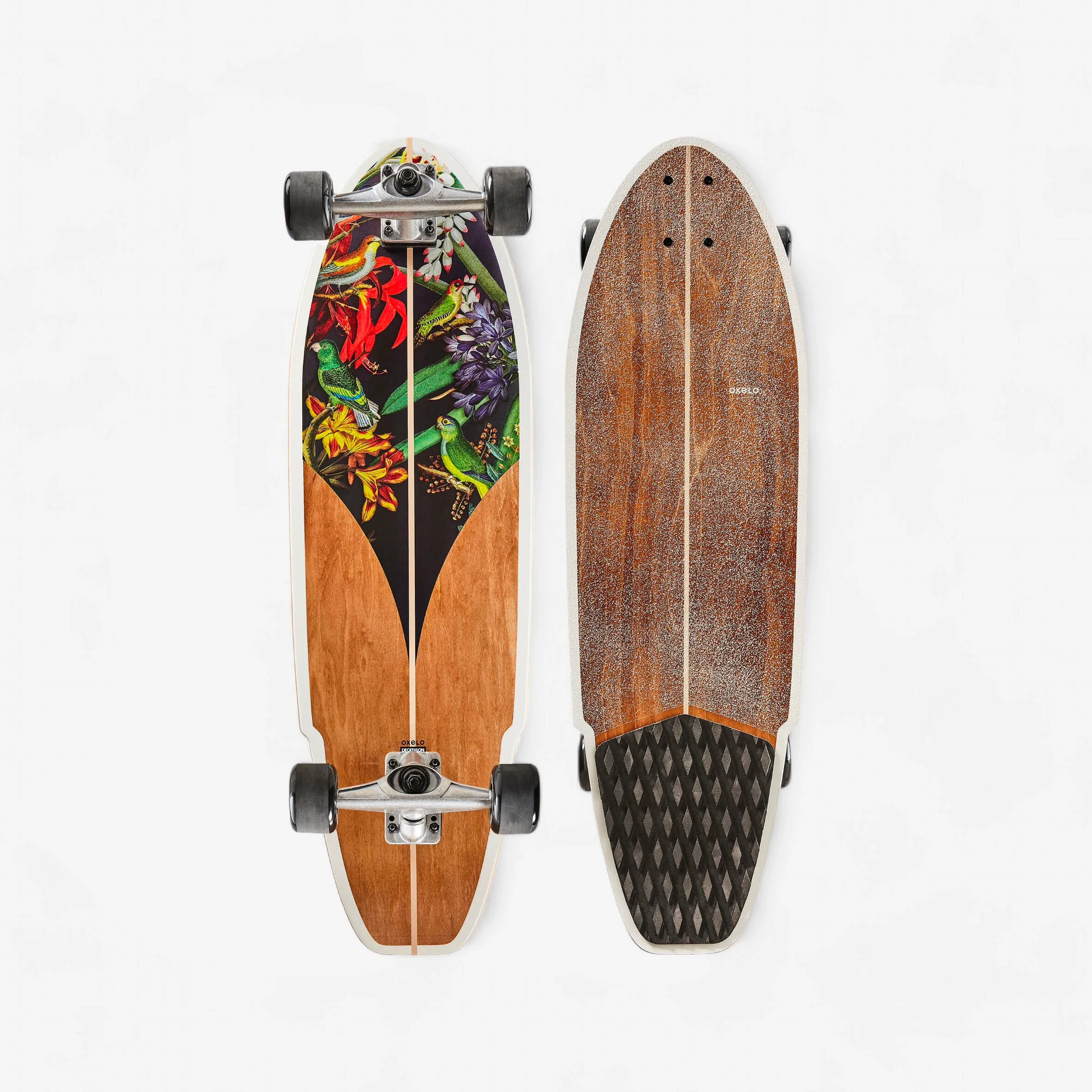
Catalogue reference: $129. Retailer prices may differ.
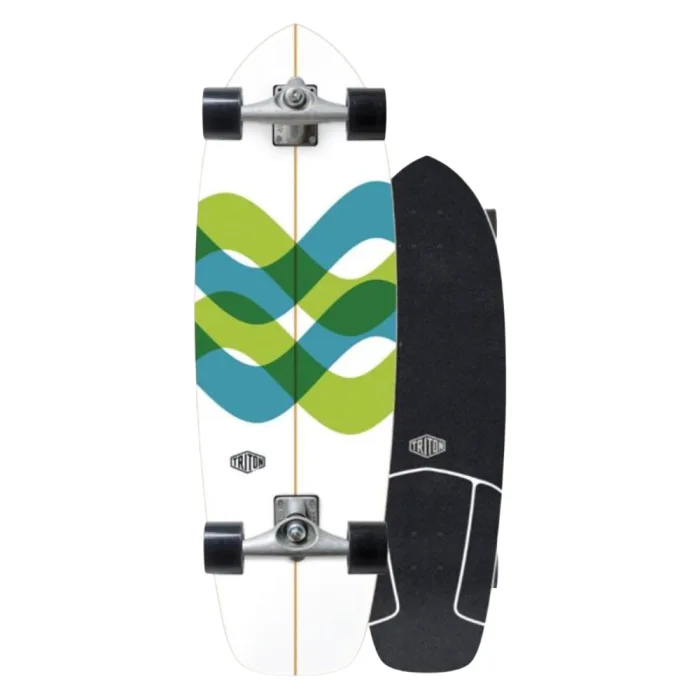
Catalogue reference: $199. Retailer prices may differ.
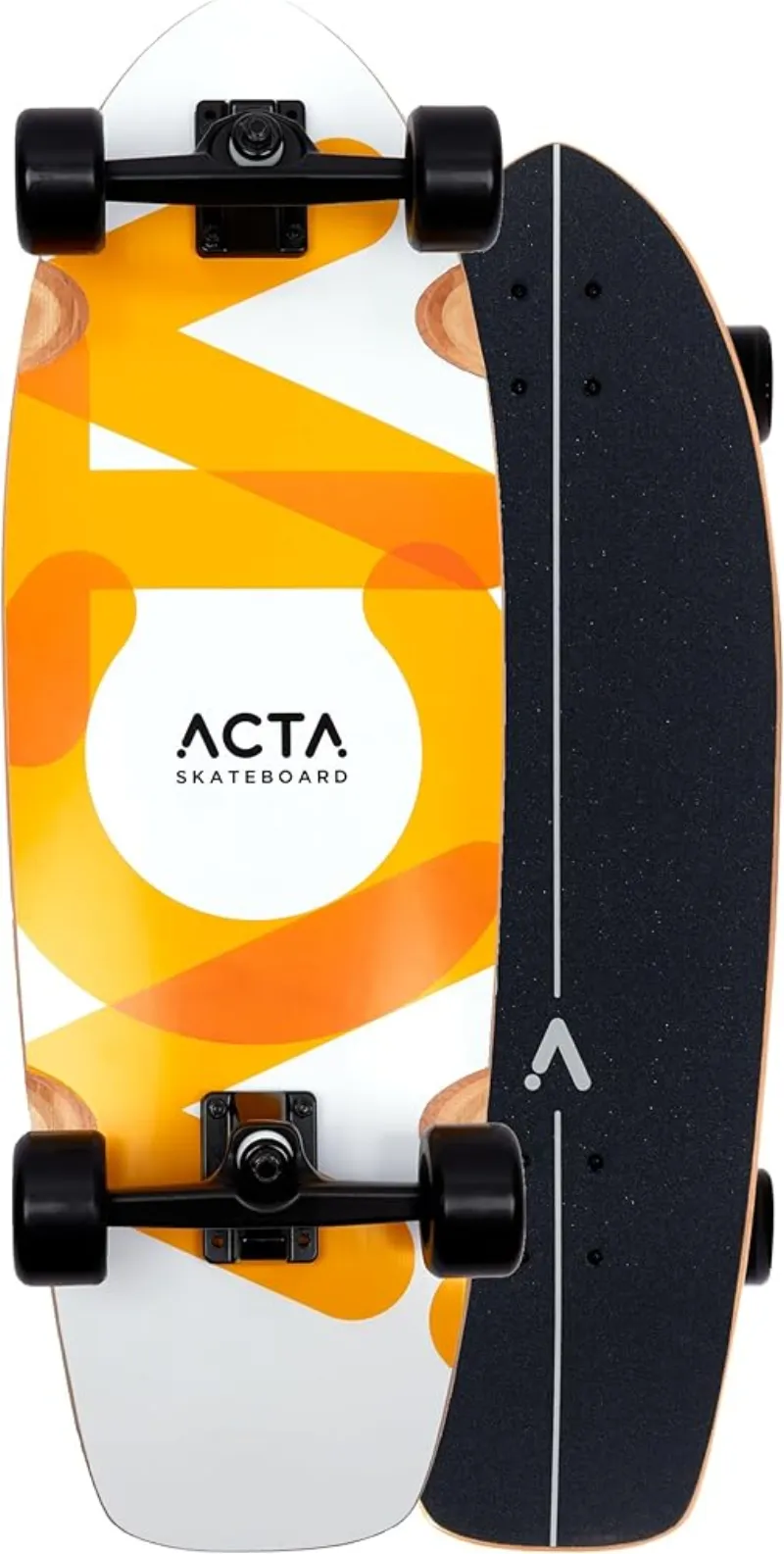
The short answer
- Low speed: step off the board onto your feet — don't ride it down.
- Higher speed: tuck and roll diagonally across your back, head tucked, hands in.
- In pads: drop to your knees and slide.
- Never catch yourself on a straight, stiff arm — that is how wrists break. Wrist guards on, every session.
Falling is the one part of surfskating people don’t want to talk about, which is exactly why it deserves a clear guide. A surfskate is much lower-risk than street skateboarding — no ollies, no ramps, no jumping — but it is not zero-risk. At some point you will lose your balance and meet the ground. Whether that becomes a scraped palm or a fractured wrist comes down to one trainable skill: how you fall.
Here is the encouraging part. Falling well is a technique, not luck, and it is far easier to learn than the riding itself. There is no real surfskate-specific falling guide online, so most riders are left adapting general skateboarding advice. This is that guide — the three techniques that cover almost every surfskate fall, the gear that backs them up, and how to drill all of it at home before you need it.
Why falling is the skill nobody teaches
Most beginners spend their first sessions thinking about staying on the board. Almost nobody practices the opposite. That is backwards. The riders who get hurt are rarely the ones who fall — everybody falls — they are the ones who fall badly: stiff, surprised, and reaching out with a locked arm.
The good news is that a trained fall is a reflex you can build. Skateboarding coaches have taught this for decades, and the same mechanics apply on a surfskate, with one wrinkle: a surfskate’s pivoting front truck can swing out from under you sideways in a way a stiff skateboard won’t, so your falls tend to be lateral, off the side, rather than straight back. That makes the sideways techniques below especially worth drilling.
This matters more the older you are. As we cover in our guide for adult beginners, reaction time slows and recovery takes longer with age — so learning to fall is not being overcautious at 45, it is being correct.
What you need before you practice
Two things make every technique below work better: the right gear, and the right ground.
Gear, in priority order:
- Wrist guards. The highest-value item for a surfskater, full stop. The most common injury is a fall onto an outstretched hand, and a wrist guard turns a likely sprain or break into nothing. If you buy one thing, buy these.
- Helmet. A head impact is the single injury you cannot train your way out of. Non-negotiable.
- Knee pads. They protect the joint and, just as usefully, unlock the knee-slide bail — you can only slide on your knees if they are padded.
- Elbow pads and padded shorts. Worth it for adults, for harder surfaces, and for anyone still building confidence. A bruised hip or tailbone can sideline you for weeks.
Ground: Learn on flat, smooth, empty pavement at walking-to-jogging speed. An empty car park early morning, a quiet bike path, or a tennis court are ideal. No hills, no traffic, no audience. A fall at low speed on flat ground is undramatic — which is exactly the condition you want while you are building the reflex.
The three ways to fall
Almost every surfskate fall can be handled with one of three responses, chosen by your speed. Learn them in order — the step-off first, because it is the one you will use most.
1. The step-off (low speed)
At the speed where most learning happens — walking to slow jogging — you usually do not need to “fall” at all. You need to get off.
- What to do: When you feel your balance going, step forward off the nose or tail and let your feet run it out, like stepping off a treadmill that is moving slowly. Let the board shoot out from under you; do not try to save it.
- What it should feel like: Undramatic. A couple of quick steps and you are standing. The board is the cheap thing to lose, not your wrist.
- Common mistake: Freezing and riding the board down because you are trying to “save” the ride. The board is replaceable. Commit to the step-off early, before the wobble becomes a slam.
Make this automatic before you ever add speed. Drill it cold: ride slowly, step off the front, repeat, until it needs zero thought.
2. The roll (higher speed)
Once you are carrying real speed — on a gentle slope, or pumping with momentum — a step-off is not always possible, and landing on one point (a hand, an elbow, a hip) concentrates all the force there. The fix is to spread the impact across your body and convert the downward energy into a roll.
- What to do: Tuck your chin to your chest, round one shoulder, and let yourself roll diagonally — from one shoulder across your back toward the opposite hip — rather than landing flat. Keep your arms in, hands soft, and try to be round, not flat.
- What it should feel like: Like a controlled judo or martial-arts roll. The energy keeps moving through you instead of stopping abruptly at one joint.
- Common mistake: Throwing an arm out to stop yourself (see below) or landing flat on your back, which knocks the wind out of you. Round shoulder, diagonal line, keep rolling.
This is the technique that most rewards at-home practice on grass, because the movement pattern is unnatural until you have done it a few dozen times slowly.
3. The knee slide (with pads)
If you are wearing knee pads, you have a third option that skaters use constantly: convert a fall into a slide.
- What to do: Drop straight down onto your padded knees and let them slide along the ground, using your hands lightly for balance — not to catch your weight. Your pads take the friction.
- What it should feel like: A smooth, controlled scrub of speed, like sliding into a base. You end up kneeling, not sprawled.
- Common mistake: Doing it without pads (don’t) or dropping your full weight onto your hands instead of your knees. The knees and pads do the work.
The one rule that ties all three together
Whatever technique you use, never brace your fall with a straight, locked arm. The reflex to throw a stiff hand out is the single most common way riders break a wrist. Keep your hands soft, your elbows bent, and your weight low. A low, relaxed body has less distance to fall and absorbs impact instead of transmitting it into a joint. Stay loose; tension is what turns a tumble into a fracture.
The one piece of gear worth buying first.
See wrist guards and pad sets on Amazon →The mistakes that turn a fall into an injury
Most surfskate injuries are not caused by the fall itself. They are caused by the reflexes we bring to it. Train these out:
- The straight-arm catch (FOOSH). Catching yourself on an outstretched, locked hand sends the full impact into your wrist and forearm. This is the most common skateboarding injury, and it is almost entirely preventable with wrist guards plus a soft-hand habit.
- Stiffening up. A rigid body transmits impact straight into joints and bone. A relaxed body distributes it. Easier said than done under adrenaline, which is exactly why you practice.
- Looking down at your feet. It pitches your weight forward and shortens your reaction time. Eyes up and ahead keeps your balance centred and gives you more warning before a fall.
- Trying to save the board. Riders tense up and ride a bad wobble all the way down because they are reluctant to “lose.” Bail early and let the board go.
- Falling backward onto your tailbone or wrists. A backward fall is the one to actively avoid — it threatens the tailbone, and the catching hands threaten the wrists. If you feel yourself going back, rotate to take it on a rounded side instead.
Anatomy of the three common injuries
Knowing where surfskaters get hurt tells you what each technique is protecting.
- Wrist. The most common, and almost always from the straight-arm catch (FOOSH). Wrist guards plus soft hands address it directly.
- Elbow. Often the second point of contact after the hand on a sideways fall. Elbow pads and the roll — which spreads load off any single point — both reduce it.
- Hip and tailbone. From hard sideways or backward landings. Padded shorts help; the knee slide and the diagonal roll both keep you off the tailbone.
None of these is exotic, and none requires bad luck to occur — they come from the untrained fall. That is the whole point of practising: you are pre-loading a better response.
Practice falling before you need it
A real fall happens in a fraction of a second, far too fast to think through. The only way the techniques work is if they are already trained into your body. Spend ten minutes on this, unloaded, before you rely on them:
- Step-off drill: Ride slowly on flat ground and step off the nose, then the tail, on purpose, again and again, until it is automatic and boring.
- Roll drill (on grass, no board): From a low crouch, round one shoulder and roll diagonally across your back to the opposite hip. Keep your chin tucked and hands in. Repeat slowly until the path feels natural.
- Knee-slide drill (in pads): From a walk, drop onto your padded knees and slide a short distance. Get used to trusting the pads.
Surf and snowboard coaches teach falling the same way — slow, deliberate, repeated — long before speed is involved. There is no reason to treat the surfskate differently.
The board under you matters too
You fall less often, and more gently, on a board that is doing some of the balancing for you. This is the same stable-setup formula we recommend for adult beginners and in our first-board guide: a bushing truck (more forgiving and progressive than a spring truck), a wider deck for a planted base, and a moderate 16–18” wheelbase for stability. Across our catalog of 200+ surfskate models, the data in our Surfskate Geometry Report shows the median deck sits near 9.9” wide and most boards land in the stable 16–20” wheelbase band — so stable options are easy to find.
Concrete stable starting points include the Decathlon Oxelo Carve 540 (a long, very stable 20.5” wheelbase that is hard to fall off), the ACTA Overlap 31” as a budget bushing option, and the Carver Triton 31” Signal for a real CX bushing truck at entry price. If you are still choosing, the best entry-level surfskates guide walks through the options, or compare stability specs directly in our catalog.
The bottom line
Falling is the real surfskate risk, but it is also the most trainable one. Three techniques cover almost everything: step off at low speed, roll at higher speed, slide on your knees in pads. Keep your hands soft, your body low and relaxed, and never brace on a straight arm. Wear wrist guards, a helmet, and knee pads every session, learn the bail before you add speed, and drill the movements at home on grass. Do that, and the fall that scares you becomes the non-event it should be.
References and further watching
These creators demonstrate the techniques above on video — worth watching to see the movement in motion:
- How to Fall — surfskate tutorial — Shane Lai (surfskate-specific).
- How to Fall Safely when Skateboarding — Sarah PM.
- How to Fall Safely and Overcome Fear in Skateboarding — whythetrick.
- You’d Be The World’s Best Skateboarder If You Did This — Skate IQ.
Keep reading
- You’re not too old to surfskate — the honest guide for adult beginners.
- What is a surfskate? — how the pivoting truck works.
- Choosing your first surfskate — the full buying framework.
- Best entry-level surfskates 2026 — stable boards to start on.